Street Maintenance Fee

Share Street Maintenance Fee on Facebook Share Street Maintenance Fee on X (formerly Twitter) Share Street Maintenance Fee on Linkedin Email Street Maintenance Fee link

Fort Worth residents consistently identify streets and transportation infrastructure as one of the City’s highest priorities. However, current funding sources are not keeping pace with the growing maintenance needs of the city’s expanding street network. Without additional investment, more streets will continue to deteriorate and further exacerbate the problem.

The Problem:

Our city has been growing fast—about 10% each year in recent years. Today, we have 8,600 lane miles of streets, which is about the same amount of pavement as a 3-lane highway stretching across the entire U.S.
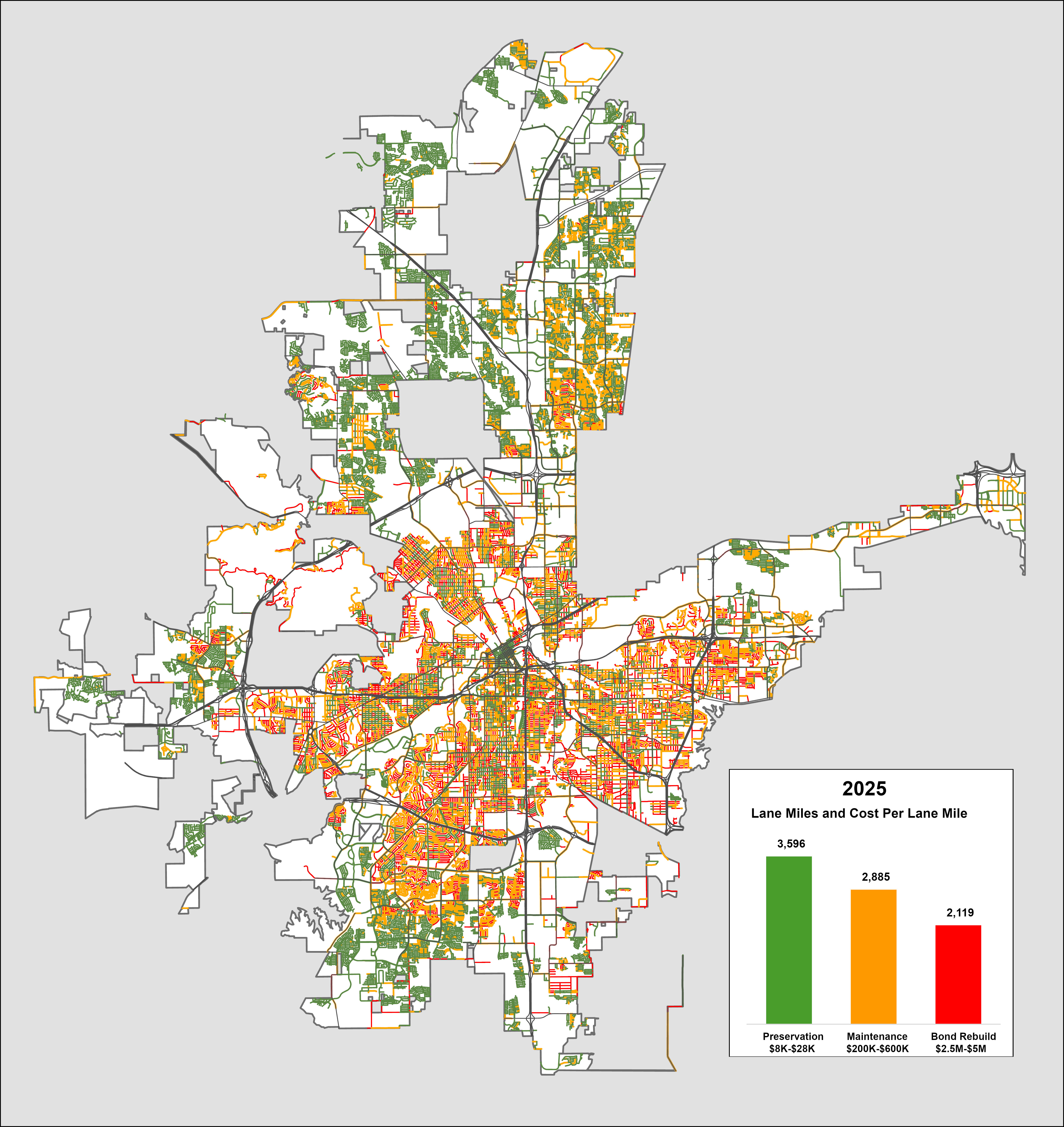
But as our street system has grown, the cost of construction has also gone up—by about 73% in recent years. At the same time, our maintenance budget hasn’t kept up. This means many streets don’t get repaired in time, which only makes the problems worse and more expensive later.
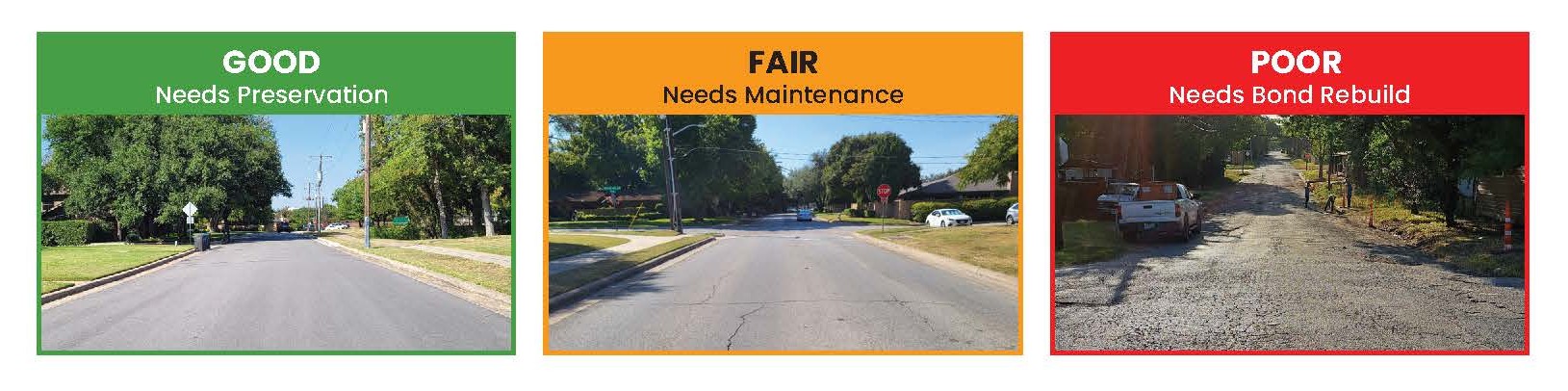
In 2025, the city spent $38 million on maintenance, which only covered about 80 lane miles. Current funding only repairs around 1% of our streets per year. Multiple studies show that we actually need about $98 million each year just to keep the streets from getting worse.

Without enough maintenance funding, more streets will slip into poor condition, and once they’re too far gone, they cost several times more to rebuild than to maintain.

Street Work Type
Typical Cost per Lane-Mile
Preservation - Keep Good Streets Good
$8,000 - $28,000
Maintenance - Fix Problems Early
$200,000 - $600,000
Reconstruction - Rebuild Failed Streets
$2.5 million - $5 million


Looking For A Solution:

To keep our streets in good condition and save taxpayer money long-term, the city needs to increase the annual maintenance budget from $32 million to $98 million. That means finding an additional $66 million each year.

The city is currently evaluating a combined approach, using the following funding sources.

  • Property Tax – This is our current source of street maintenance funding, but the current property tax rate is insufficient to cover the full $66 million gap. The full gap would represent a 5.25 cent property tax increase. Furthermore, the cities operational budget from property tax is now entirely needed for public safety departments like police and fire.
  • Street Maintenance Fee (SMF) – Some Texas cities already have street fees. It works like a utility bill (similar to water or stormwater fees). This would be a supplemental fee to be used in conjunction with existing property tax funding.

It's important to have an approach that allows us to fund the gap quickly because every year that maintenance is under-funded the problem grows and costs escalate quickly. That's why the City is looking at a “Combined Approach”—a mix of gradually increasing the portion of property taxes used for streets and adding a Street Maintenance Fee. This would provide stable funding without requiring a big tax rate hike, and not require a large fee to fund the full $98M needed per year.

The proposed supplemental Street Maintenance Fee (SMF) as part of a long-term strategy to improve street conditions, would bring in an estimated $27.4M per year in additional funding.

How the Proposed Fee Works

The proposed fee structure is based on an industry-standard transportation methodology consistently used to estimate roadway usage and traffic impacts. The methodology relies on established vehicle trip generation and vehicle-miles-traveled (VMT) data, using recognized transportation engineering practices and empirical traffic measurements to estimate how different property types use the street system. Some of the factors include but aren’t limited to land use type, number of trips, trip length, and property characteristics. This approach provides a technically sound and data-driven basis for determining proportional roadway impacts.

How Residents Would Calculate Their Fee

Under the current proposal, a single-family residence would pay $3.00 per month.

Other property types would be calculated using the same proportional methodology but require knowing the development units to estimate the monthly charge.

Category Rate X Development Units = Monthly Charge

Development Units for Fee Categories:

  • Multi-family properties would be charged based on dwelling units
  • Hotels would be charged based on hotel room count
  • Schools would be based on student population
  • Commercial properties would generally be based on square footage

To improve transparency and public understanding, the City plans to provide an online property fee map and fee calculator so residents and businesses can estimate their anticipated charges.


Benefits of the Proposed Street Maintenance Fee

If implemented, the proposed fee would significantly expand the City’s ability to maintain streets before they fall into severe disrepair. The funding would support both preservation maintenance and heavy maintenance activities, which transportation professionals identify as the most cost-effective strategy for maximizing pavement life.

The current proposed maintenance provides the following citywide benefits:

  • Increasing contract heavy maintenance work by approximately 50% annually
  • Establishing a 5-year preservation cycle for streets in good condition, providing maintenance once every 5 years
  • Increases pavement life by 12% citywide each year.
  • Preventing an estimated $125 million annually in future reconstruction costs
  • Preventing the equivalent of approximately one major bond reconstruction program per year

Public Engagement and Next Steps

The City has begun extensive public engagement efforts, including focus groups, stakeholder meetings, online tools, website updates, and future public education initiatives. Below is a frequently asked questions handout for public education.

If City Council directs staff to continue refining the proposal, additional public engagement, ordinance development, billing integration, and implementation planning would continue through 2026 and 2027. Under the current schedule, the fee would not begin collection until Spring of 2028.

Fort Worth residents consistently identify streets and transportation infrastructure as one of the City’s highest priorities. However, current funding sources are not keeping pace with the growing maintenance needs of the city’s expanding street network. Without additional investment, more streets will continue to deteriorate and further exacerbate the problem.

The Problem:

Our city has been growing fast—about 10% each year in recent years. Today, we have 8,600 lane miles of streets, which is about the same amount of pavement as a 3-lane highway stretching across the entire U.S.

But as our street system has grown, the cost of construction has also gone up—by about 73% in recent years. At the same time, our maintenance budget hasn’t kept up. This means many streets don’t get repaired in time, which only makes the problems worse and more expensive later.

In 2025, the city spent $38 million on maintenance, which only covered about 80 lane miles. Current funding only repairs around 1% of our streets per year. Multiple studies show that we actually need about $98 million each year just to keep the streets from getting worse.

Without enough maintenance funding, more streets will slip into poor condition, and once they’re too far gone, they cost several times more to rebuild than to maintain.

Street Work Type
Typical Cost per Lane-Mile
Preservation - Keep Good Streets Good
$8,000 - $28,000
Maintenance - Fix Problems Early
$200,000 - $600,000
Reconstruction - Rebuild Failed Streets
$2.5 million - $5 million


Looking For A Solution:

To keep our streets in good condition and save taxpayer money long-term, the city needs to increase the annual maintenance budget from $32 million to $98 million. That means finding an additional $66 million each year.

The city is currently evaluating a combined approach, using the following funding sources.

  • Property Tax – This is our current source of street maintenance funding, but the current property tax rate is insufficient to cover the full $66 million gap. The full gap would represent a 5.25 cent property tax increase. Furthermore, the cities operational budget from property tax is now entirely needed for public safety departments like police and fire.
  • Street Maintenance Fee (SMF) – Some Texas cities already have street fees. It works like a utility bill (similar to water or stormwater fees). This would be a supplemental fee to be used in conjunction with existing property tax funding.

It's important to have an approach that allows us to fund the gap quickly because every year that maintenance is under-funded the problem grows and costs escalate quickly. That's why the City is looking at a “Combined Approach”—a mix of gradually increasing the portion of property taxes used for streets and adding a Street Maintenance Fee. This would provide stable funding without requiring a big tax rate hike, and not require a large fee to fund the full $98M needed per year.

The proposed supplemental Street Maintenance Fee (SMF) as part of a long-term strategy to improve street conditions, would bring in an estimated $27.4M per year in additional funding.

How the Proposed Fee Works

The proposed fee structure is based on an industry-standard transportation methodology consistently used to estimate roadway usage and traffic impacts. The methodology relies on established vehicle trip generation and vehicle-miles-traveled (VMT) data, using recognized transportation engineering practices and empirical traffic measurements to estimate how different property types use the street system. Some of the factors include but aren’t limited to land use type, number of trips, trip length, and property characteristics. This approach provides a technically sound and data-driven basis for determining proportional roadway impacts.

How Residents Would Calculate Their Fee

Under the current proposal, a single-family residence would pay $3.00 per month.

Other property types would be calculated using the same proportional methodology but require knowing the development units to estimate the monthly charge.

Category Rate X Development Units = Monthly Charge

Development Units for Fee Categories:

  • Multi-family properties would be charged based on dwelling units
  • Hotels would be charged based on hotel room count
  • Schools would be based on student population
  • Commercial properties would generally be based on square footage

To improve transparency and public understanding, the City plans to provide an online property fee map and fee calculator so residents and businesses can estimate their anticipated charges.


Benefits of the Proposed Street Maintenance Fee

If implemented, the proposed fee would significantly expand the City’s ability to maintain streets before they fall into severe disrepair. The funding would support both preservation maintenance and heavy maintenance activities, which transportation professionals identify as the most cost-effective strategy for maximizing pavement life.

The current proposed maintenance provides the following citywide benefits:

  • Increasing contract heavy maintenance work by approximately 50% annually
  • Establishing a 5-year preservation cycle for streets in good condition, providing maintenance once every 5 years
  • Increases pavement life by 12% citywide each year.
  • Preventing an estimated $125 million annually in future reconstruction costs
  • Preventing the equivalent of approximately one major bond reconstruction program per year

Public Engagement and Next Steps

The City has begun extensive public engagement efforts, including focus groups, stakeholder meetings, online tools, website updates, and future public education initiatives. Below is a frequently asked questions handout for public education.

If City Council directs staff to continue refining the proposal, additional public engagement, ordinance development, billing integration, and implementation planning would continue through 2026 and 2027. Under the current schedule, the fee would not begin collection until Spring of 2028.

  • Take Survey
    Share Street Maintenance on Facebook Share Street Maintenance on X (formerly Twitter) Share Street Maintenance on Linkedin Email Street Maintenance link
Page last updated: 15 Jun 2026, 04:15 PM